
Comfort Bird in Wood: What It Is, How to Carve It, and Why It Feels So Good
Published on: July 15, 2025
Reading time: 6 minutes

One day, I received a small package, and inside I found a bunch of wooden wonders, all hand-carved. They had come a long way—straight from Virginia, USA. All of them were carved by a dear friend of mine, with great care and dedication. And among them, there it was: a comfort bird.
I already knew about the existence of comfort birds, but holding one in your hand gives you a very special feeling. They’re small, smooth, “warm,” and depending on the type of wood, even fragrant. It’s as if every fiber were soaked in something good. As if that carved, polished gesture, made just for you, kept giving you love every time you touched it.
And that’s the power of comfort birds: no words needed—just hold one in your palm, and something beautiful happens.
Maybe you have no idea what it feels like to hold one. But trust me—it feels really good. At first, I thought it was just my obsession with wood… Then I did some research to learn more, and now I’m going to share everything I found out with you!
A Story Carved in Wood
Like all good ideas, the comfort bird was born almost by accident. Several sources attribute its creation to Frank Foust, born in 1929, a woodworker and carver from Montoursville, Pennsylvania (US). In 1982, when he realized he could no longer craft complex sculptures, he didn’t give up. After seeing some small painted birds made by a friend, he decided to start creating these adorable little objects, which he originally called “birds of peace.”
From 1982 until he passed away in 2021, he is said to have made a huge number of them—about 4,500 pieces using over 300 different types of wood. Other sources report 1,100 birds carved from 27 types of wood, which is still an amazing achievement. But what truly matters is that he never stopped making them, all the way to the end.
call them comfort birds because they’re so smooth and soft, and they fit just right in your hand so that it’s comforting just to hold them and rub them
Frank Foust (creator of the comfort bird)
His mission was so deep and generous that it brought love to countless people. He organized humanitarian efforts and volunteer work, bringing comfort to hospitals and retirement homes, and helping people affected by Hurricane Katrina and the earthquake in Haiti. With his comfort birds, he raised thousands of dollars for charity.
From this incredible story, a movement was born—one that continues even without him. Between studies, symbols, and real gestures, many people around the world have taken up his legacy. Just like my friend Chuck, who carves comfort birds every day to give to those in need of a sincere gesture of kindness.
And apparently, there’s a kind of balance in making and giving these little birds: the joy you feel in receiving one is mirrored by the joy the carver feels in making it for you. That’s a rare gift, don’t you think?
More Than Looks: The Real Purpose of a Comfort Bird
Comfort birds. The name says it all: little birds meant to rest in the palm of your hand… and in your heart. They’re not meant to be displayed. They’re not made to impress with detail or precision. They’re meant to comfort. To be held. To silently remind you that someone thought of you.
For this reason, they are widely used in hospitals, nursing homes, and during moments when words are not enough—or simply unnecessary. Some people carve dozens and donate them. Some distribute them through organizations, others give them one by one, in heartfelt gestures that warm more than a thousand polite phrases.
Chuck, too, carves many of them. He often tells me stories of people who feel better, who smile, who hold tight to these little smooth birds as if they contained a bit of hope. And maybe… they actually do.
Every time he tells me about someone who was going through a rough time and felt better thanks to one of his birds, my heart swells. It’s such a beautiful thing! But… is it coincidence, suggestion, or is there something more?
Does It Really Work—Or Is It Just Suggestion?
There are no scientific studies dedicated exclusively to comfort birds, that’s true. But their effect can easily be linked to psychological practices that are already well known.
- The first is the most immediate: a comfort bird works just like a worry stone—a smooth stone you keep in your pocket and rub in moments of stress. The gesture is simple, repetitive, reassuring. And if the object is small, round, smooth, and made with care… the effect is similar. It’s a tactile object that invites calm.
- Then there’s a second, deeper concept: the transitional object. Back in the 1950s, psychoanalyst Donald Winnicott described such objects (like stuffed animals, blankets, or symbolic items) as things that help people feel safe during emotional transitions—loss, fear, or change. It’s the same instinct that makes a child feel better by hugging their favorite toy.
In this sense, the comfort bird is a “modern” object that responds to a very ancient need. A smooth piece of wood, not only with a tender shape—but also a purpose carved inside it: to be given as a gift to help someone.
Some hospitals and care facilities understood this very well. Like the project at Parkview Health in Indiana, where local volunteers carve and distribute them to patients during the hardest moments (parkview.com). Or in the UK, where the organization Bowel Cancer UK used them to accompany cancer patients and raise funds (bowelcanceruk.org.uk). Or Ohio Hospice, where they’re given in palliative care units (ohioshospice.org), just to name a few.
THolding one and rubbing your hand over its smooth contours can bring a sense of well‑being and comfort, much like the ‘worry rock’ of times past
John Meissner (psychologist)
Does it work because it’s cute? Because the gesture soothes you? Because someone thought of you while carving it? Yes. Yes. And yes. Whether it’s suggestion, neuroscience, or simply a concrete form of care… what matters is that it works!
Want to Try? Here’s How to Make One!
The good news is that, since they’re made with a purpose and not just for beauty, anyone can carve one—even total beginners. All you need is a knife, a small piece of wood, some sandpaper… and the right intention!

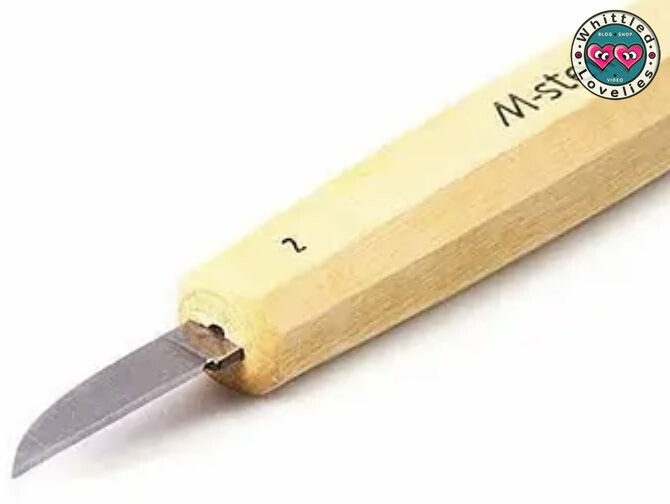

In about two hours, you’ll have a beautiful little amulet in your hands. And if you enjoy it and have a bit of equipment, you can even bring that down to just one hour of work. Not bad, right? Just think how much good you can do in so little time!
There’s no single “right” wood for this project. As Frank’s story teaches us, part of the beauty is trying them all. But it’s always worth paying attention to the type of wood: if it’s too hard, use proper tools or you’ll destroy your hands; and if it has potential toxicity, it could be harmful to you… or to the person who’ll be holding it every day in their palm.
I tried making one myself… and then I got hooked! In the end, I decided to try something a bit different: a comfort cat (we’ll see if it turns out just as lucky!). The bird felt a little overused 🤭 — you’ll find out how it went in the video below! 🤩
Visit the Printable Models section if you want a helpful base to start with—whether for the comfort bird or the comfort cat I drew for you. You’ll also find all the other templates from my projects, here on the blog or on my YouTube channel.
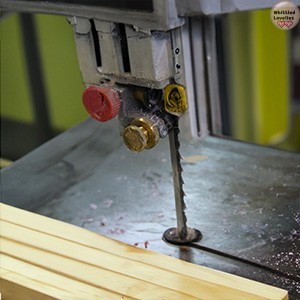
In the video, I used the faster method: with a bandsaw (or scroll saw) you can reduce rough shaping time significantly, with just a few simple tricks. But these are small objects—if you’re not in a rush, a knife is more than enough.

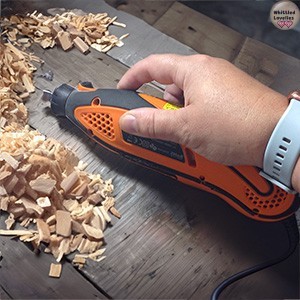
I refined the bird with a knife (it was made of Linden wood – Tilia), and for the cat I chose Apple wood – Malus domestica, partly to show you how to work with harder woods using a rotary tool like a Dremel.
Add softness to the lines. No sharp edges. A surface as smooth as velvet. That’s it. And that’s how a little piece of wood is born—one that comforts, one that simply exists. And sometimes… that’s just enough.
You can make one for a friend going through a rough patch. For someone you wish you could hug, but don’t know how. Or even just for yourself, if you need something to hold in your hand and squeeze a little.
A comfort bird alone probably won’t change the world. But it can change a day. And from there… everything can start again. 🤗😘
Did the story and creation of the Comfort Bird spark your curiosity?
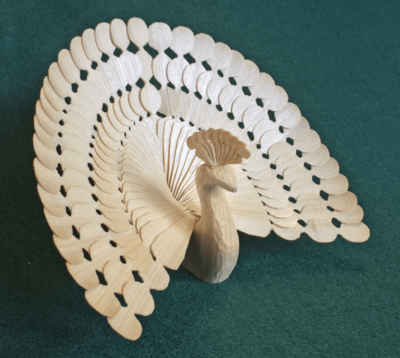
Then let yourself be amazed by another small masterpiece carved in wood: the Fan Bird.
An ancient, elegant little bird that opens like a fan and holds legends, symbols, and incredible craftsmanship.
I discovered it thanks to two amazing enthusiasts… and since then, I haven’t stopped looking at it with wonder!
This is an article written by a human for humans!
All articles in the blog are written by me. No contributors, no people paid to write content for me.
Posts written by guests or friends of the blog are marked under the title with the words “guest post.” These are friendly collaborations, contributions to the carving community.
No AI (artificial intelligence) support is employed in the writing of blog articles, and all content is made with the intent to please humans, not search engines.
Do you like my content?
Maybe you can consider a donation in support of the blog!

Click on the button or on the link Ko-fi to access a secure payment method and confidently offer me coffee or whatever you want!
From time to time, in my articles, you’ll find underlined words or buttons with the 🛒 symbol. These are links that lead to further insights, or affiliate links to selected products that I use or would personally choose for the same kind of project I’m talking about.
The price for you stays the same, but by purchasing through these links you help me grow the blog and keep sharing the world of wood in a free and independent way. 💛